Yesterday my case of the yucks had retreated enough so I could get a bit of work done.
This tallit is being made foe Cavill, a rabbinical student. The due date is soon, really soon. My fist task was to cut strips of silk for the stripes. The best way to do this task is to snip a cut into the fabric, and then pull a thread at the center of the cut.
 The pulled thread leaves you with a line that shows you exactly where to cut.
 This beautiful silk tussah made the task of pulling the thread difficult. But time on the phone with BOTH of my sisters made passing the time a bit easier. Eventually it was time to start painting the text.
Both my home growing up and the Jewish day school that I attended had similar approaches to spirituality in prayer. This approach may be foreign to those more familiar with the world of Jewish Renewal where the attainment of spiritual satisfaction is both more paramount and more public.
I was brought up in a tradition where the ecstatic and the spiritual are deeply private experiences. You are brought to those moments through the beauty of the texts. One's expression of that ecstatic moment is inward and private.
One of the things that I really like about working with Cavill is that he too comes from a similar understanding of the spiritual. Cavil chose this liturgical poem for his tallit.
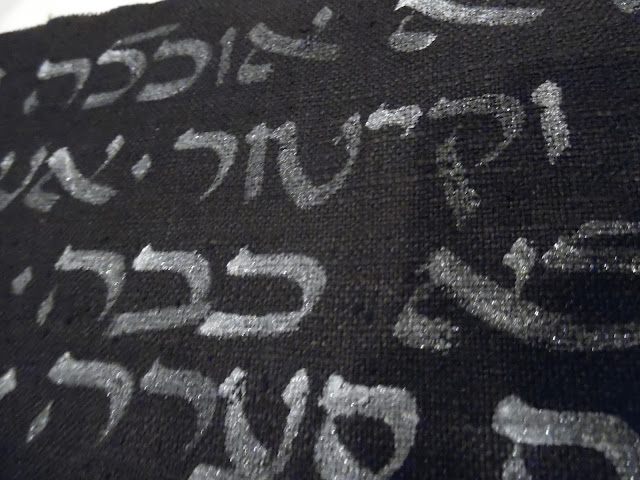
It's a great way to really get into a piyut /liturgical poem. I was struck at how the alphabetic structure helped to keep me on task and helped me to keep my place.
 I loved how the ideas flowed from line to line. I finished calligraphing the poem for one side of the tallit.
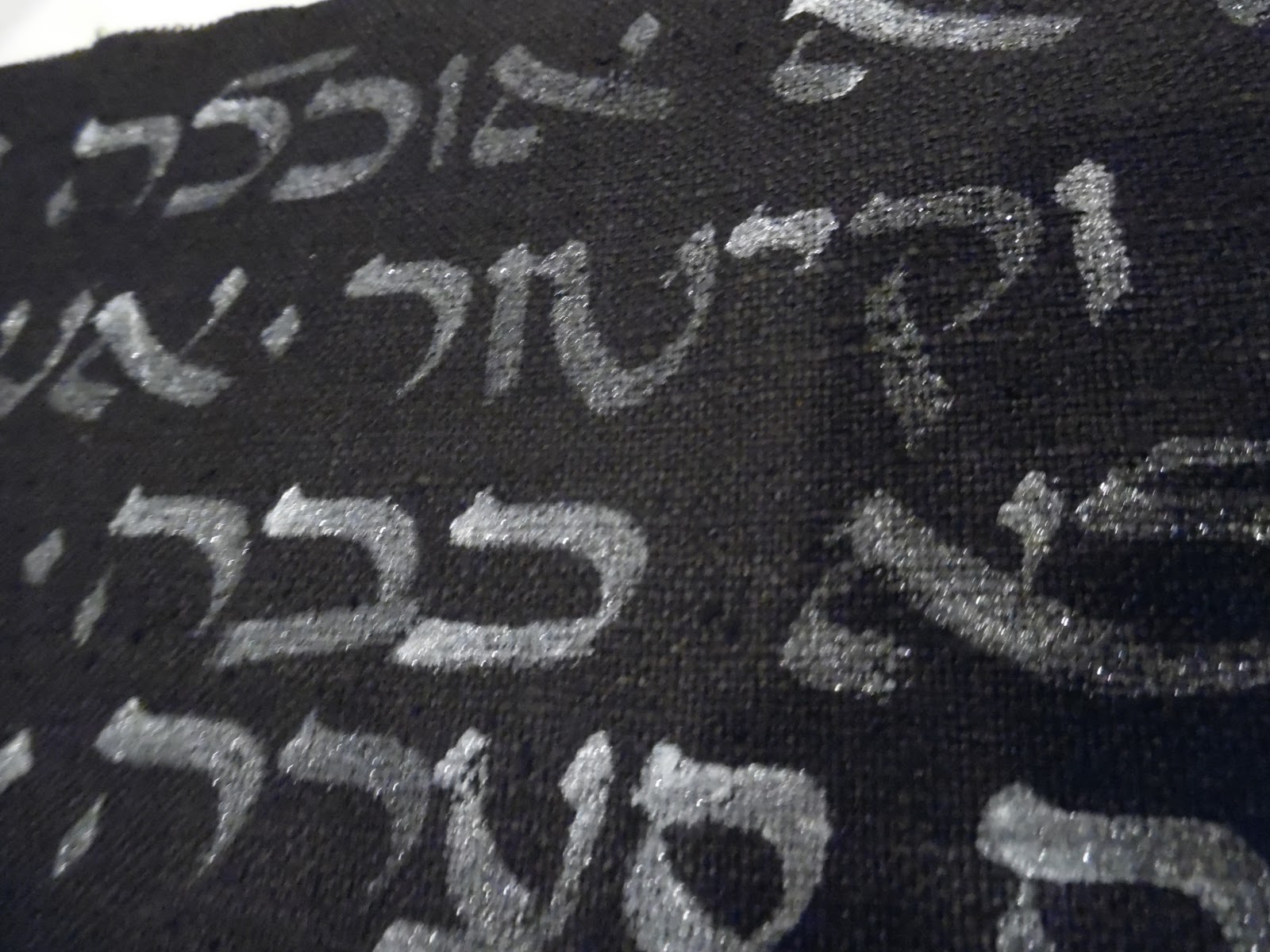
 And then I did it again for the other stripe. I love that I have learned this piyut. S
oon I will paint the same lines in black on white silk.
This tallit is being made foe Cavill, a rabbinical student. The due date is soon, really soon. My fist task was to cut strips of silk for the stripes. The best way to do this task is to snip a cut into the fabric, and then pull a thread at the center of the cut.


Both my home growing up and the Jewish day school that I attended had similar approaches to spirituality in prayer. This approach may be foreign to those more familiar with the world of Jewish Renewal where the attainment of spiritual satisfaction is both more paramount and more public.
I was brought up in a tradition where the ecstatic and the spiritual are deeply private experiences. You are brought to those moments through the beauty of the texts. One's expression of that ecstatic moment is inward and private.
One of the things that I really like about working with Cavill is that he too comes from a similar understanding of the spiritual. Cavil chose this liturgical poem for his tallit.
ובכן וירא מלאך ה` אליו בלבת אֵשׁ:
אֵשׁ אֲשֶׁר הִיא אוֹכְלָה אֵשׁ
אֵשׁ בּוֹעֶרֶת בִּיבֵשִׁים וּבְלַחִים
אֵשׁ גּוֹחֶלֶת בְּשֶׁלֶג וְקִיטוֹר
אֵשׁ דּוֹמָה לַאֲרִי רוֹבֵץ
אֵשׁ הַמַּרְאָה כַּמָּה מַרְאוֹת
אֵשׁ וַדַּאי כִּי לֹא כָבָה
אֵשׁ זוֹרַחַת וּמְשׁוֹטֶטֶת
אֵשׁ חוֹשֶׁשֶׁת וּמִתְלַקָּחַת
אֵשׁ טָסָה בְּרוּחַ סְעָרָה
אֵשׁ יוֹקֶדֶת בְּאֶפֶס עֵצִים
אֵשׁ כִּי כָל יוֹם מִתְחַדֶּשֶת
אֵשׁ לֹא נֻפְּחָה מֵאֵשׁ
אֵשׁ מַעֲלָה לוּלַבִּין
אֵשׁ נִיצוֹצֶיהָ הֵם הַבְּרָקִים [...]
אֵשׁ שְׁחוֹרָה כָּעוֹרֵב
אֵשׁ תַּלְתַּלִּים כְּצִבְעֵי קֶשֶׁת.
Now an angel of the Lord appeared to Moses in
a blazing fire…
a fire that devours fire; a fire that burns in
things dry and moist; a fire that glows amid snow and ice; a fire that is like
a crouching lion; a fire that reveals itself in many forms; a fire that is, and
never expires; a fire that shines and roars; a fire that blazes and sparkles; a
fire that flies in a storm wind; a fire that burns without wood; a fire that
renews itself every day; a fire that is not fanned by fire; a fire that billows
like palm branches; a fire whose sparks are flashes of lightning; a fire black
as a raven; a fire, curled, like the colours of the rainbow!
My task yesterday was to copy onto the silk. This poem was new to me. I read it through a couple of times and really liked it.
Then as I copied the text, I paid attention to each word, to each letter of each word, to each stroke of every letter.


oon I will paint the same lines in black on white silk.
Comments
Post a Comment
I love hearing from my readers. I moderate comments to weed out bots.It may take a little while for your comment to appear.